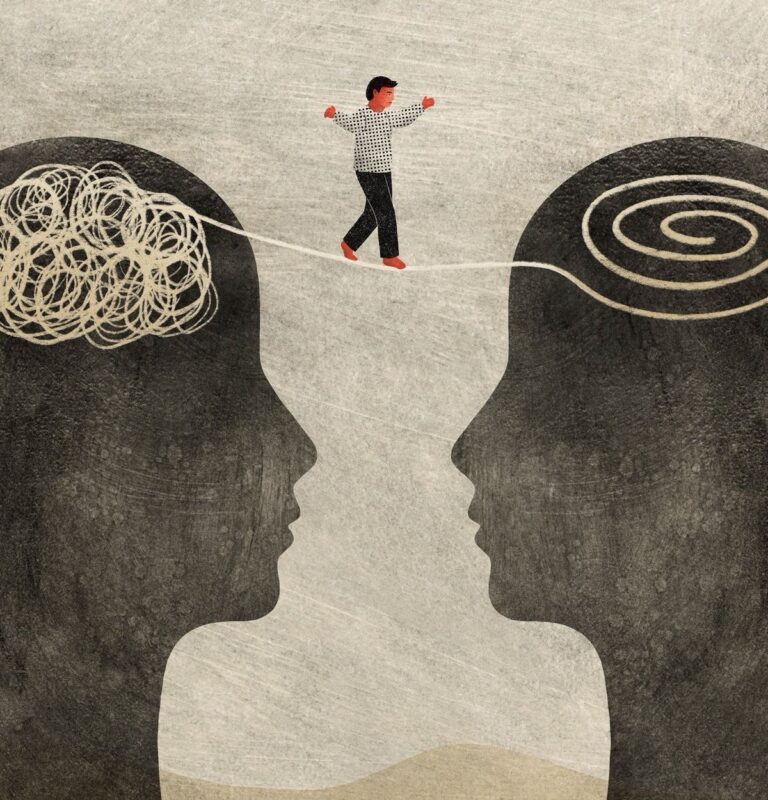
The past is already gone. But simply saying, “Move on, what’s done is done,” does not mean that you have truly accepted the past.
Ignoring the past and accepting the past may look the same from the outside—because in both situations, a person is trying to move forward. However, internally, the impact they have on your mind and emotional well-being is completely different.
The real difference between the two is this:
• What Does It Mean to Ignore the Past?
When you ignore the past, you are running away from the memories or emotions connected to it. You lock them away in a box and hide them somewhere in your mind, convincing yourself that everything is fine.
What does it look like:
“What’s done is done. I don’t want to talk about it.”
Or keeping yourself so busy that you never allow yourself to think about the past. But in reality, the past is not forgotten. Even if we ignore painful memories, they can remain hidden in our subconscious mind.
The downside:An ignored past never truly disappears. It continues to stay buried inside and may later show itself as anxiety, anger, or sudden emotional breakdowns. When you ignore something, it can gradually begin to control you. Many people wonder, “Why do I feel anxious or sad for no apparent reason?” Sometimes, the real reason may be an unresolved part of the past that was never understood or processed.
Just as ignoring the symptoms of an illness can allow the illness to become worse, ignoring emotional pain from the past can make it grow deeper over time. Instead of understanding our emotions, we suppress them. In psychology, Thought Labeling.
If we never learn from our past, we are more likely to repeat the same mistakes in the future.
• What Does It Mean to Ignore the Past?
Accepting the past does not mean that what happened was right, or that you are happy about it. It simply means that you have acknowledged the reality that what happened has already happened, and it cannot be changed.
Until we accept it, our mind remains trapped in an internal battle:
“This shouldn’t have happened.”
“If only I had done things differently, maybe everything would have been okay.”
We keep trying to change something that is no longer within our control. When you finally accept reality, that unnecessary battle comes to an end. You are not justifying what happened—you are simply surrendering to the truth by saying, “Yes, this has become a part of my life.”
What does it look like: “You allow yourself to say, ‘I am human, and I have been hurt.’”
The benefit: When you accept the past, you allow yourself to feel the pain or anger instead of fighting it, and gradually let those emotions leave you. Acceptance takes away the power of the old story. The memory may still remain, but it no longer has the power to hurt you in the same way. This gives a person Emotional Freedom. You are no longer a prisoner of your past. You begin to understand that the past is only one page of your life—not the entire book.
Remember:
- Accepting the past : Understanding the experience with your Conscious Mind, learning from it, and emotionally letting it go.
- Ignoring the past : Suppressing the pain into your Subconscious Mind without understanding or feeling it.
A Simple Story to Understand the Difference:
Imagine there is a large rock (your past) in the middle of your path.
The person who ignores it: Closes their eyes and keeps walking, but repeatedly trips over the rock, falls, and gets hurt.
The person who accepts it: Notices the rock and acknowledges that it is there. They understand that the rock cannot be removed, so they carefully walk over it or around it and continue their journey.
Conclusion:
Ignoring the past provides temporary relief, but it often leads to greater pain later.
Accepting the past may be difficult and painful at first, but in the long run, it sets you free.